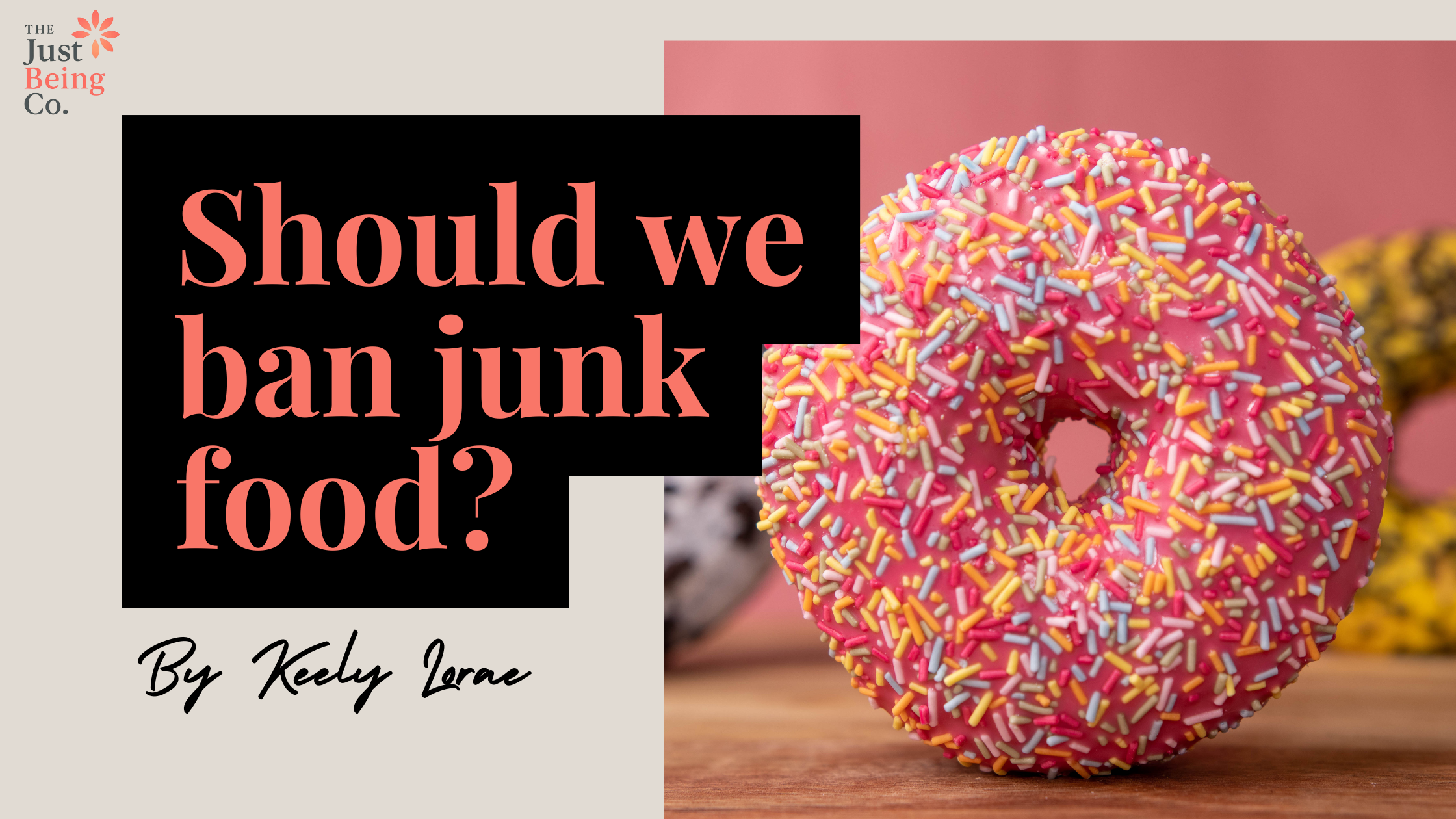
Should we ban junk food for kids?
In recent news, the South Australia government has come under fire for banning any advertisements on public transport, which includes buses, trains and trams.
The ban will see the removal of foods like chocolate, lollies, confectionery, ice-cream, soft drink, processed meats and chips.
The idea behind the ban is to eliminate kids exposure to highly addictive junk food from an early age, with data indicating that food advertisers target areas with kids and 80% of them are for unhealthy options.
The policy has been implemented to curb childhood obesity, which was sitting at 26% as of 2022. That’s more than 1/4 of our kids that are clinically out of a healthy weight range.
The public have mostly supported this move, with the backlash mainly coming from advertising groups and food companies.
I personally think that it’s a good start.
It’s been proven that children are far more susceptible to subliminal advertising and the use of colours like bright red, blues and yellows in food packaging is not an accident.
Perhaps we need to also be pressuring the supermarkets to rethink their positioning of sweets and soft drinks directly next to their checkouts and entry ways. This is not an accident either. Kids become conditioned to see their favourite junk food at their eye level and will in turn be more likely to ask for it.
In Australia, there’s what’s called a “slotting fee” which advertisers pay to the supermarket to get favourable placement and position on shelves – eg. eye level. Australia doesn’t demand transparency on these fees, but an ABC investigation estimated that companies were paying hundreds of thousands of dollars to supermarkets to get those premium spots.
This creates an unfair market advantage and pushes smaller companies out competition.
Meaning, even if there were better alternatives, we aren’t primed to be able to see them or they can’t afford to compete with the big budgets of large companies.
So, while it’s great that young people aren’t being bombarded with ads for lollies on their trip home school, it doesn’t eliminate the problem of supermarkets still favouring product placement of these same highly addictive foods.
I also think that the ban or at least limitation of use for television and digital media, would benefit from being reviewed.
Again, we know that advertisers in fast food will outlay huge ad spend at peak times.
Ever noticed that around 5pm back to back ads will run for multiple fast food outlets. Often every 5-10 minutes. This is because they spend millions of dollars on market research and they know they’ve got a better chance of persuading you to buy their food when you’re getting hungry.
In Australia, the snack and confectionery industry has been estimated to generate in $5 billion in 2025.
And fast food an astonishing $27.9 billion in revenue.
This is clearly a numbers game and what’s a few hundred thousand in paid advertising when you can generate that kind of return?
The issue is that we are not better off for it.
Adult obesity is at an all time high with stats indicating that more than 60% of Australia’s adult population is now clinically overweight or obese and 50% of Australians are living with chronic disease.
Kids aren’t the only ones susceptible to subliminal marketing techniques.
Clearly adults aren’t too.
Because food companies know that the younger they can get people hooked, the more permanent customer they will have.
Sugar is addictive. We know this.
When you eat sugar, it causes a spike in blood glucose. This stimulates the release of dopamine in the brain’s nucleus accumbens — the same area involved in pleasure and reward. Over time, frequent sugar consumption can make the brain expect and crave that dopamine hit, similar to addictive substances.
That’s why many food companies add unnecessary sugar to their product.
There’s many other overlapping issues with what’s added to “junk food” like vegetable oils, food colourings, fats and so on… but none have been as notably addictive as sugar.
A move toward demanding less of these nasty ingredients and implementing genuine health benefiting products to the market is a good start.
Food companies need to be held to a higher standard and put their customers ahead of their profit margin.
But that’s just a happy little fantasy.
Reducing the number of times our senses are bombarded with advertisements, is a good place to start. Good job on that one South Australia.
Educating yourself and learning what ingredients are actually lurking in the food you feed yourself and your kids is likely the only way to make a difference.


